Monday, 22 April 2013

5 Steps to Booking a Great Safari

If you are unfamiliar with East Africa, trying to plan a safari and be a bit daunting. So many tour operators and parks and itineraries to remember and keep track of. Here are 5 stops to help you organize the planning stage of your safari experience.

 1. Is the tour operator a member of KATO or TATO? 
The Kenya Association of Tour Operators (KATO) and the Tanzania Association of Tour Operators (TATO) hold their members to standards in terms of reliability and customer service. Make sure any company you book a safari with is a member of either KATO or TATO when traveling in East Africa.  Check online (www.katokenya.org/ and www.tatotz.org/) to see if your tour operator is a member.


 2. Read reviews for your tour operator from past customers online 
Tripadvisor, facebook, and other online resources make finding testimonials and reviews very easy. The level of organization, the quality of the vehicles, the expertise of the drivers, and much more info can usually be gleamed from the average experience of past customers.


 3. Narrow down the type of safari that you want

  • When do I want to travel? 
  • What do I want to see and experience? (ie. Big cats, the Great Migration, relaxed game viewing, elephants, etc) 
  • What is my budget? (Can I afford safari via minibus, via 4x4 vehicle, or a flying safari? What level of luxury do I want?) 
  • How many days do I want to be on safari? 
  • How many people will be traveling with me? 


When you have the answer to these questions, your tour operator can put together an itinerary that suits you and your group.


4. Understand what is included and excluded 
When looking at an itinerary and price, make sure the following are included:

  • Airport pickup and dropoff 
  • Park fees 
  • All domestic flights where applicable 
  • All meals that you require 

Also note, beverages will usually be paid directly at the lodges/camps. And there should be an optional “Flying Doctors” insurance that will provide a free medical evacuation in the case of emergency (typically around $20 per person).


 5. Don’t forget the optional activities 
A safari can be a once-in-a-lifetime experience, so don’t forget all the interesting activities available. When my family visits, this is what I tell them they should add on to their safari:

  • Masai Village Visit (approx $20-25 per person) – You will see the Masai people all around, but actually visiting a village and interacting with the people there is an eye-opening experience 
  • Hot Air Balloon Safari (approx $450 per person) – yes, a little pricey, but imagine floating above the Masai Mara or Serengeti for 1 hour in the early morning before landing for a champagne breakfast. 
  • Sundowner (approx $35 per person) – What better way to relax after several hours on your game drive than to have a few drinks and hors d'oeuvres as the sun sets. This will take place away from the lodge. Bush 
  • Dinner/Bush Breakfast (approx $40-60 per person) – Dine outside in an exclusive area away from the lodge where nature surrounds. Highly recommended for couples and large groups.

For more information about our safaris, please go to www.travel-wild.com.  Find Kenya safaris, Tanzania safaris, Mombasa and Zanzibar properties, and more.

Thursday, 15 November 2012

Lesser-Known Kenya

The Masai Mara Game Reserve and The Amboseli National Park take most of the headlines as far as safaris in Kenya are concerned, but the country’s other parks demand another look for their impressive diversity of wildlife combined with less foot traffic.  Today we look at Samburu National Reserve.

Samburu lies 325 km north of Nairobi, approximately a 5 hour drive.  The Ewaso Ng’iro River provides the main source of water in this arid environment, supporting the thick forests and groves in the reserve. 

The comparatively less well-known Samburu National Reserve explodes with wildlife, including many species that are rare in the other parts of the country.  Over 900 elephants share the park with large predators like the lion, leopard, and cheetah.  Wild dog are common, along with buffalo and hippo.  The Grevy’s zebra, Somali ostrich, reticulated giraffe, gerenuk and beisa oryx make up the “Samburu Special 5”.  Over 450 species of bird also call the reserve home.

Samburu boasts over 20 camps and lodges and has its own airstrip, accommodating fly-in safaris.  Fewer tourists over the years has helped preserve Samburu’s serene and untouched landscape.

Interesting Story – The story of Kamunyak is a remarkable one.  Kamunyak (meaning ‘Blessed One’) is a lioness living in the Samburu National Reserve.  She is renown for adopting at least 6 oryx calves, fighting off predators including other lions in order to protect her adopted family.  Because the calves will not behave like lion cubs and wait while she hunts for food, she had repeatedly suffered from starvation.

Kamunyak was the subject of the film “Heart of a Lioness”, which first premiered on the BBC and later on Animal Planet in the US.  She was last spotted in 2004 and despite a number of searches, has not been seen since.

Check out these amazing videos of Kamunyak –
http://www.youtube.com/watch?v=2ZbpbvkuBF4
http://www.youtube.com/watch?v=s7Qigv_h42c


For more information about our safaris, please go to www.travel-wild.com.  Find Kenya safaris, Tanzania safaris, Mombasa and Zanzibar properties, and more.


Wednesday, 7 November 2012

How many men does it take...

to lift a bull elephant's leg?  Answer - 6 large men trying as hard as they can.

Here are some pictures from the recent Elephant Relocation that occurred at the end of September.  Note - Other than the press present on Day 1 of the relocation, Travel Wild clients were the only visitors allowed to be part of the action.

The bull elephant, being loaded onto the platform

The bull elephant, being adjusted on the platform so he can enter the truck safely

The bull elephant being loaded into the back of the truck

His legs were too long so KWS officials had to lift his legs around the truck's doors

Having arrived, the elephant family rushes out of the truck to inspect their new home in the Masai Mara

The elephants are now living in the Masai Mara and are said to be acclimating well to the new environment


For more information about our safaris, please go to www.travel-wild.com.  Find Kenya safaris, Tanzania safaris, Mombasa and Zanzibar properties, and more.


Tuesday, 30 October 2012

Operation Elephant Relocation

Starting on 22nd September, 45 elephants were relocated over 150km from Narok to the Masai Mara.  Travel Wild partnered with the Kenya Wildlife Service (KWS) as the ONLY ground-handler to allow clients to witness this amazing event. 

The 45 elephants were found to be isolated from the main elephant population in the Mara, cut-off by human settlements and farms.  The elephants were destroying farmland and public property, and even disrupting children on their way to school. 


So the decision was made to relocate the elephants from Narok back to the Masai Mara.  Travel Wild clients along with Travel Wild Managing Director, Anjali Devani, were on-hand as the only non-press and non-KWS personnel to witness the relocation.  The process was incredible.  Families of 4-8 elephants were relocated together each day.  KWS snipers (shooting tranquilizer darts) shot the elephants…from a helicopter…while the elephants are running away…WOW!  NOTE: Travel Wild clients can, for an additional price, actually fly in the helicopter as the KWS officials track and shoot the animals.  Once immobilized, the elephants were then hoisted up into containers on a truck using a crane.  Eight vets were on duty at all times, checking the elephants for any complications.  After vital signs were checked and tracking collars placed on each elephant, Travel Wild clients were allowed to touch and pose for pictures with the elephants.

The elephants were then given an injection to wake them up before the journey to the Masai Mara, a trip that would be dangerous for the animals if they were still tranquilized.  Armed rangers accompanied the entire process in order to ward off would-be poachers.  After 150km with 4 very mobile elephants in the back of the truck (and a few tire punctures along the way), the truck reached the dropoff point in the Masai Mara.  The driver backed the truck up to a small hill that would act as a ramp for the elephants to disembark safely.  Our clients were allowed to climb on top of the truck to take pictures as the truck doors were opened and the (slightly irritated and confused) family of elephants came charging out.

Now safely away from humans and within the protection of the Masai Mara Game Reserve, these 45 elephants are adjusting well to their new home, according to KWS officials. 

More animal relocations are planned for 2013.  Travel Wild will send updates on dates and prices as the KWS finalizes their relocation plans. 

Here’s to many more successful, exhilarating, and incredible animal relocations in 2013.

Monday, 15 October 2012

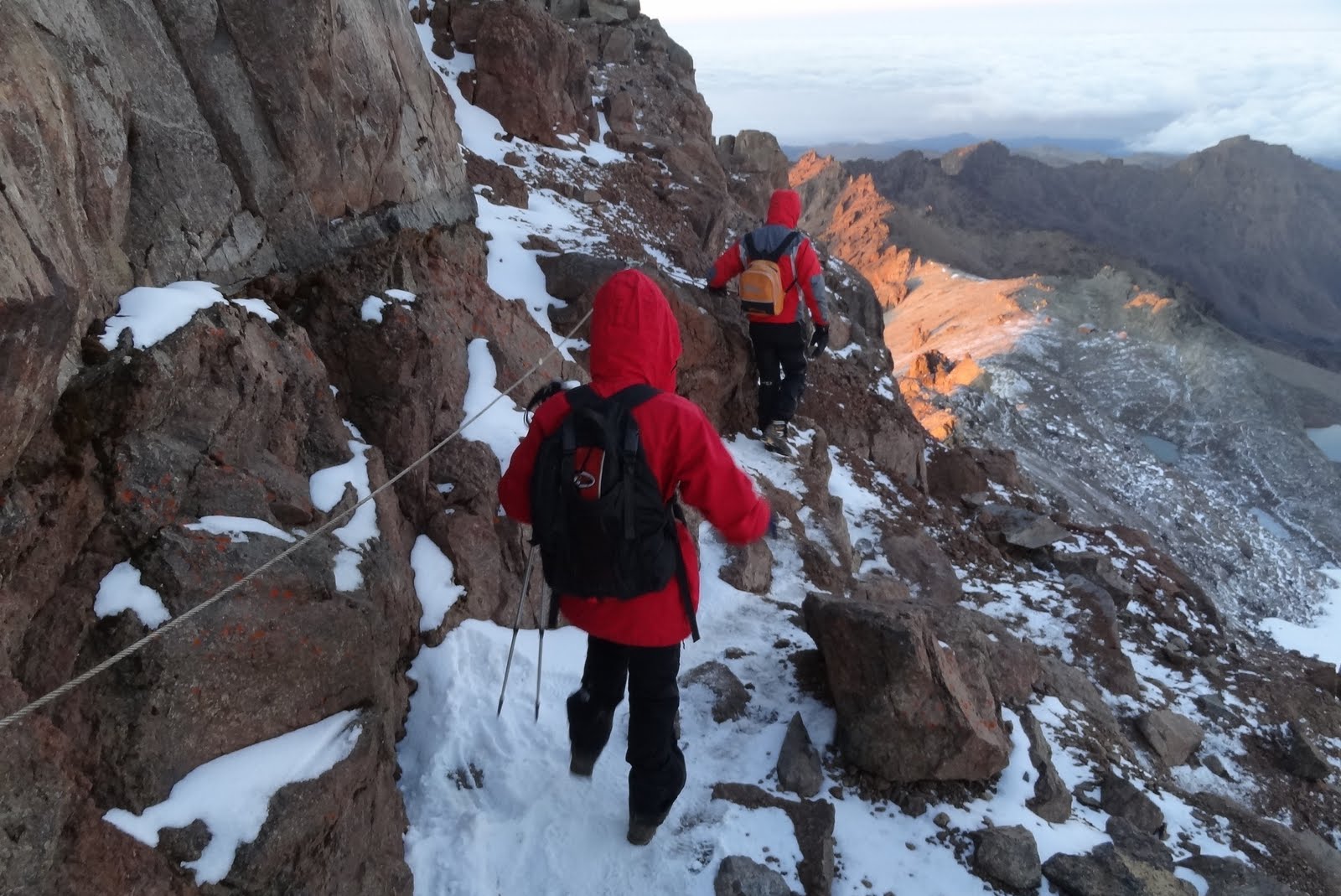
Climbing Mt Kenya

I wanted to share a few pictures from a recent client who trekked up Mt Kenya.  The scenery is amazing and eerie.  Africa’s second tallest peak, Mt Kenya is much steeper and many say more challenging than Kilimanjaro.  To reach the summit requires technical climbing, but most ascend to Point Lenana (4985m) just as the sun rises over Kenya.  Only 15,000 visitors trek the mountain each year.


Tuesday, 18 September 2012

Stress-Free Holiday in 6 Steps

Smooth and Seamless
How to make your Kenyan holiday stress-free


1.  Get your visa before you arrive.
Anyone who has flown into Jomo Kenyatta International Airport knows this rule.  30 min, 45 min, 60+ min.  Especially during the high season, it can take a long time to receive your visa upon arrival.  By receiving your visa before you arrive, you skip the long line at the airport, get to your luggage quickly, and start your holiday without stress or having to wait in a queue.

2.  Have US Dollars and Kenyan Shillings with you before you leave the airport.
Don’t stress about needing an ATM or cash machine before you head out on safari or head to the coast.  You can get USD at the airport, which also has a number of ATMs that will allow you do withdraw Shillings using your Visa or Mastercard.  Most hotels and lodges accept credit cards, but for tipping, souvenirs, and other purchases, it’s always nice to have locally accepted money on hand.

3.  Know general tipping guidelines.
These are some basic guidelines…but tipping obviously depends on your appraisal of the level of service you experienced:
Waiters – 10-20%
Hotel Staff (that provide personal service or tend specifically to your room) - $5-10 per day
Safari Driver/Guides - $5-10 per day*
Porters - $1 per piece of luggage
*Tip the drivers at the end of your trip.

4.  Have the telephone number of the person meeting you at the airport.

5.  Expect to hear animal noises at night.
Hyenas, birds, and a host of other animals will bring the wild of East Africa to your senses at night.   Relax to the nightly melody or bring ear plugs if you require complete silence.

6.  Know your back…and how many bumps it can handle.
The road to the Mara, the road between Tsavo and Amboseli.  These two roads are quite bumpy and can surprise travelers if they are not prepared.  Bring back support and sit near the front if you experience regular back pain.  Alternatively, book a fly-in safari and skip the roads altogether.

Friday, 7 September 2012

Mombasa 101

Many travelers looking for a beach holiday in the warm Indian Ocean waters off East Africa know what they want, but don’t know where to find it.  Some want a quiet, relaxing few days, others want a bonfire party on the beach every night, while others want activities (both on land and in the ocean) to keep them active.  This will be the first of a several part series that explores the coastal destinations of Kenya and Tanzania.

Mombasa – North Coast
Located relatively close to the Moi International Airport in Mombasa, it is typically a 30-minute drive to your hotel.  The North Coast is perfectly suited for those looking to take part in excursions in the city of Mombasa.  Fort Jesus, Old Town, and more can be experienced either before or after time spent in the surf.  Known for its festive atmosphere, the North Coast often plays host to nights of partying into the early morning hours.  For those looking for an active nightlife and the true Swahili culture that dominates Mombasa, the North coast is the perfect location. 

Mombasa – South Coast

More laid back and with more resorts and large hotels than the North Coast, the South Coast offers a different take on the beach holiday.  Located further from the city of Mombasa, beach go-ers must drive to the docks (approx. 30 min) before boarding the ferry that takes one to the South Coast.  If you’re looking for the majestic blue waters found in postcards, Mombasa’s South Coast is for you.  Relax in the white-sand beaches under the shade of a coconut tree, mojito (or pina colada) in hand.
 
Both Coasts
A quick run-down of what both beaches offer.  Enjoy the same exhilarating activities, including: snorkeling, scuba diving, kite-surfing, windsurfing, jet-ski, deep sea fishing, boating, tubing, and more.  White-sand beaches and blue waters.  Warm weather year round (rainy season from March to May).  February is the hottest month.